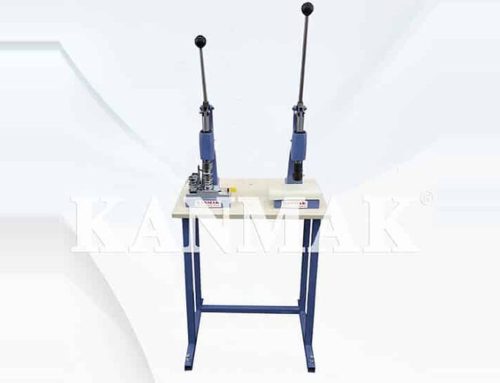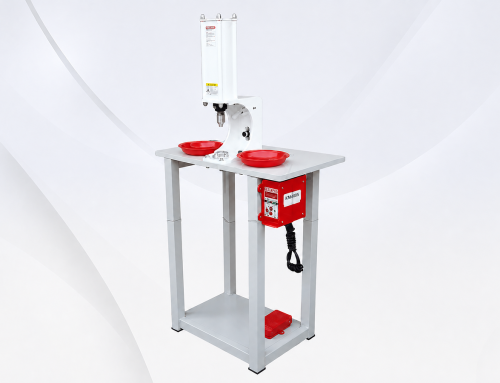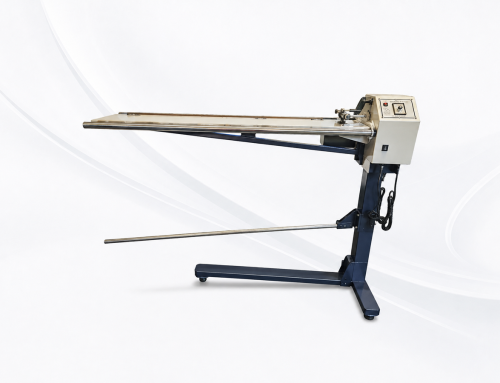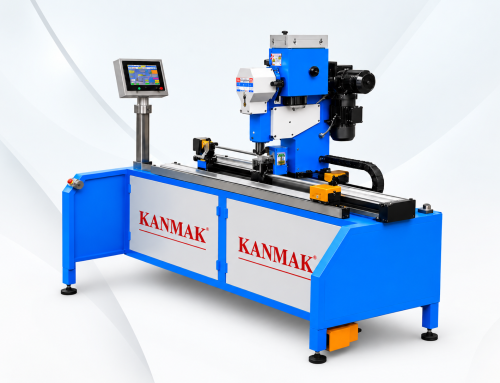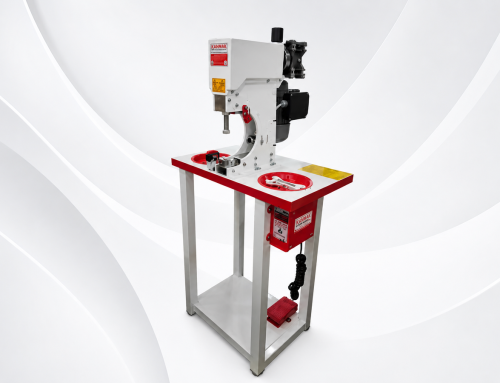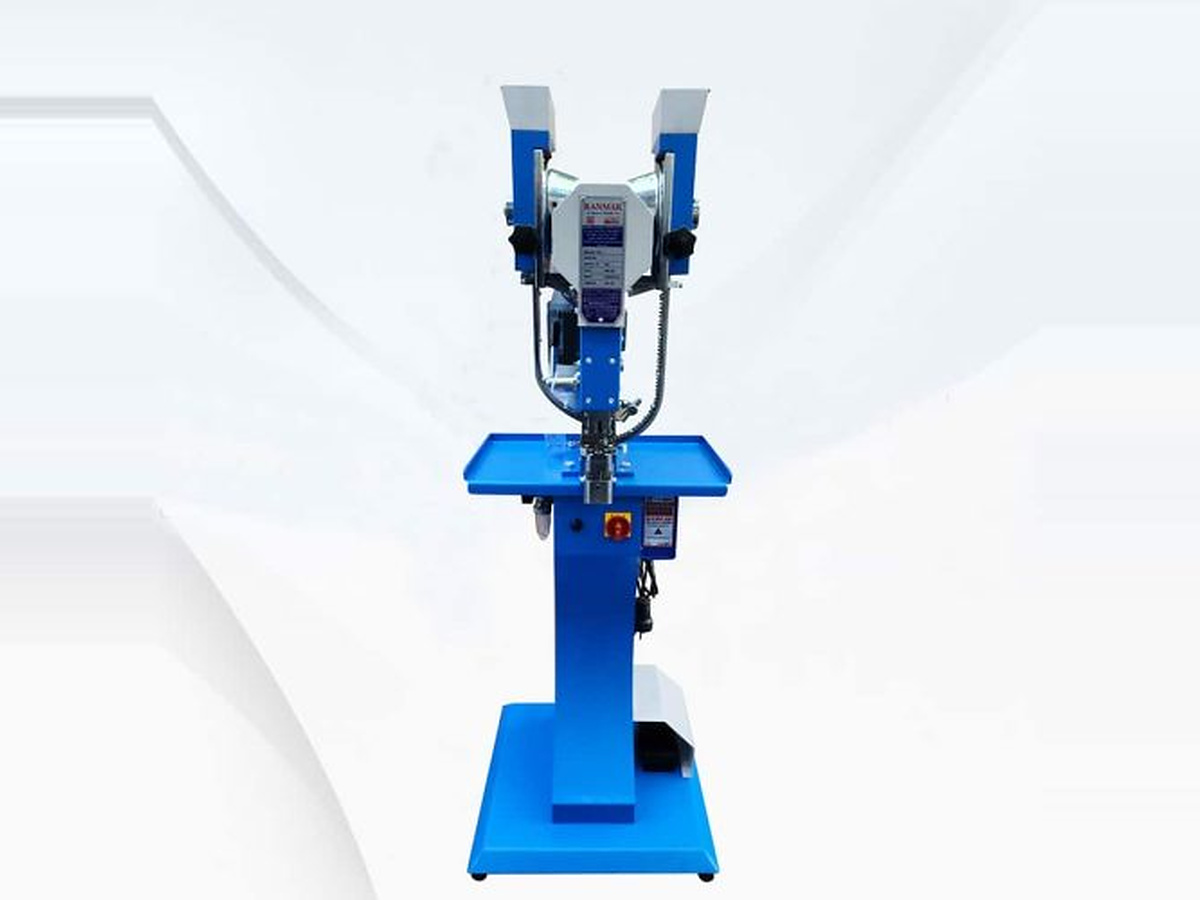
Choosing an eyelet setting machine involves more than comparing prices or motor power. First, identify your eyelet dimensions, washer requirements and material thickness. Then consider daily production volume and the fastener feeding system. This helps you choose a suitable machine for tarpaulins, footwear, bags or textiles.
The right machine choice starts with a trial using your own material and eyelets.
At Kanmak Makina, we manufacture in Türkiye. In this guide, we explain the differences between electric, semi-automatic and automatic machines, die compatibility and the factors that affect setting quality. We also share questions to ask when comparing eyelet setting machines.
What is an eyelet setting machine?
An eyelet is a ring-shaped fastener that supports the edge of a hole in a material. An eyelet setting machine uses suitable dies to secure this fastener. It helps create a consistent attachment point for laces, cords or other connectors. However, joint strength depends on the material, fastener design and application quality.
Buyers may also use the terms “eyeleting machine”, “eyelet press” or, for certain applications, “grommet setting machine”. Terminology alone does not establish compatibility. Therefore, provide a fastener photo, its internal and external diameters, and a material sample when requesting a quotation.
Applications: tarpaulins, footwear, bags and textiles
- Tarpaulins, awnings and tents: Assess the number of layers, edge reinforcement and eyelet dimensions together. Large panels also need adequate handling space around the working point.
- Shoes and slippers: Fastener dimensions, positioning and visible surface quality matter for lace holes. Therefore, check the result on a product sample.
- Bags, belts and leather goods: Consider leather thickness and access to the setting point. In particular, assess a finished sample for lined or multilayer products.
- Textiles and garments: Check lightweight fabrics for crushing, puckering or tearing. Choose the fastener, dies and machine settings together.
- Banners and advertising materials: Inspect the hole edge and reinforcement. Then assess suitability for the intended installation using a sample.
- Fly screens: The profile and connection design can change the machine requirements. Discuss your particular screen assembly with the manufacturer before choosing.
Electric, semi-automatic and automatic eyelet machines
Look at both the pressing action and the feeding arrangement. First, ask how the eyelet and any washer reach the working point. Then establish whether punching happens separately or in the same cycle as setting. Also, an automatic fastener feed does not necessarily advance the product itself; the operator may still position the material.
KM400K: electronically controlled electric eyelet machine
The KM400K Eyelet Setting Machine operates on 220 V single-phase power and does not require a compressor. Its electronic control offers a 0–99 impact setting and a production counter. Suitable dies also allow different fastener applications. If you need automatic eyelet feeding, specify this requirement separately.
KM6400: single-channel semi-automatic eyelet machine
The KM6400 Eyelet Setting Machine automatically feeds the eyelet through a single channel and combines punching and setting in one cycle. It also includes laser positioning and LED work lighting. Confirm channel and die compatibility for your eyelet size when ordering, and state any washer requirement during the quotation stage.
KM6300: automatic eyelet and washer setting machine
The KM6300 Automatic Eyelet and Washer Setting Machine combines punching and setting in one cycle. It offers configurations for working with or without washers. With suitable equipment and dies, it supports metal or plastic eyelets and plastic washer applications. Businesses assessing both serial production and washer feeding can consider this model.
Daily output depends on the fastener, material, loading time and operator workflow. Therefore, assess the cycle and product positioning times together in a trial with your own parts. A machine’s listed operating speed alone does not establish finished-product output.
How to check eyelet dimensions, washers and die compatibility
First, provide actual measurements alongside trade size names such as “No. 2” or “No. 3”. Next, check the eyelet’s internal diameter, outside diameter, barrel length and the combined material thickness. This avoids choosing dies solely from a size label.
- Upper and lower dies: Use a set suited to the eyelet’s shape and dimensions. Also confirm that the dies and feeding channel fit the selected machine.
- Washers: Different applications can require different washer arrangements. Establish whether a washer is necessary, its material and how it will feed.
- Material and punching: Fabric, leather, tarpaulin and cardboard behave differently. Assess hole size and punching method on a sample.
- Finished result: Inspect both sides of the fastener. Then check for looseness, rotation, cracking or material damage.
What to check if eyelets are loose, crushed or tearing the material
A loose eyelet may require a review of die compatibility, barrel length or machine settings. Crushing or cracking can also result from incompatible fasteners and dies, or unsuitable settings. For torn material, assess hole size, edge distance and the layer structure.
Avoid trying to resolve every problem by increasing impact force. Set aside a sample and identify the cause with the manufacturer. Before changing dies, cleaning or carrying out mechanical work, stop the machine, isolate its energy sources and follow the model-specific operating instructions.
What affects the price of an eyelet setting machine?
The feeding system, washer application, channel and die set, optional equipment and quotation scope all affect the price. Also compare service, spare parts and installation conditions. This gives you a more useful basis for a decision than the purchase price alone.
Review current models and pricing in our automatic eyelet machine and eyelet setting machine categories. Also confirm in writing which dies, channels and services the quotation includes.
Frequently asked questions
Can the same eyelet machine handle tarpaulins and footwear?
Some models can suit different applications with compatible fasteners and dies. However, thickness, eyelet dimensions and access to the working point vary. Therefore, provide samples of both products and confirm compatibility.
Can one machine set plastic and metal eyelets?
This depends on the equipment, feeding arrangement and dies. For example, the KM6300 offers options for different metal and plastic eyelet applications. Nevertheless, confirm compatibility with your particular fastener before buying.
Does every eyelet machine require a compressor?
No. For example, the KM400K does not require a compressor. Air requirements and auxiliary systems can differ on other models. Therefore, confirm the selected machine’s current electrical and air requirements before installation.
Where can I watch the machine working?
Check the Video section on the model’s product page and the Kanmak Makina YouTube channel. You can also request a demonstration video showing an application similar to yours when asking for a quotation.
Find the right eyelet machine for your production
Send us photos of both sides of your eyelet, its measurements, washer requirements, material type and daily production target. We can then assess a suitable model and die arrangement together. With Kanmak’s Turkish-made options, you can discuss machine selection directly with the manufacturer.
Request eyelet machine advice and a quotation →
You can also read our fastener and die selection guide and machine maintenance tips.