
When buying a snap fastener machine, the first decision is whether to choose a manual press, an electric machine, a motor-driven model or an automatic system. The answer depends on daily output, material, electrical supply and budget. This guide compares the four main groups.
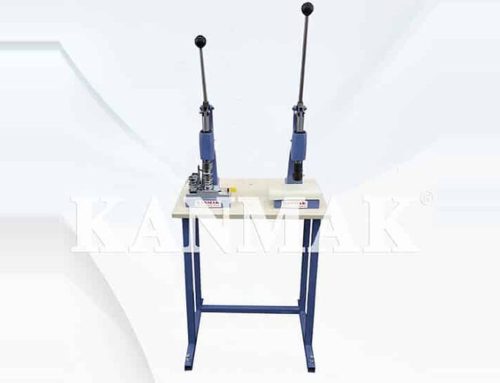
1. Manual presses: starting out and small batches
Lever-operated impact presses need no electricity. The operator lowers the handle to set the accessory. They offer an economical solution for samples, repairs and workshops producing a few hundred pieces a day.
The KM 700 and wide-base KM 650 use cast-iron bodies machined on CNC equipment, with heat-treated steel components. Height and centre adjustments accommodate different dies for snaps, eyelets, rivets and punching.
Best suited to: New workshops, samples, repairs and workspaces without an electrical connection.
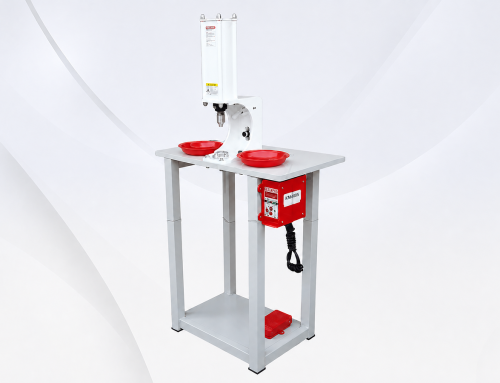
2. Electronic electric machines: adjustable force and 220V supply
Electric machines use a foot pedal, leaving both hands available to position the material. Models such as the KM 400 and KM 400K run on 220V single-phase power without a compressor.
The electronic controller adjusts setting force from 0 to 99. Use lower force on thin fabric and higher force when appropriate for leather or tarpaulin. A counter helps track output. For portability, the KM 200 has a height-adjustable movable head that accommodates different die sizes.
Best suited to: Garment, leather, footwear, bag and tarpaulin businesses handling different material thicknesses and regular production.
3. Motor-driven machines: consistent performance under intensive use
Motor-driven models suit production lines operating throughout the day. The KM 500 Quiet Model is available in 380V and 220V versions. Its special bushed shaft system guides each stroke; Kanmak states a 15-year guarantee against play in this shaft system.
The steel-body KM 500Ç uses a geared eccentric mechanism for quiet operation and runs on 220V single-phase power.
Best suited to: Medium and large manufacturers making thousands of settings per day or working multiple shifts.
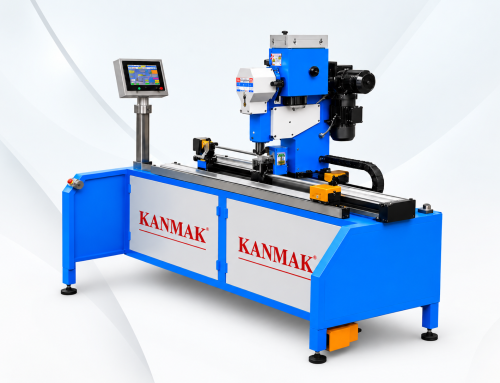
4. Automatic systems: automatic component feeding
Instead of positioning each accessory component individually, the operator relies on an automatic feeding system that brings parts to the dies. This improves production speed and consistency.
- KM 5800 model 61: A two-machine set; the 300/Y handles the cap and spring components and the 300/M handles the male side.
- KM 6100 Automatic Baby Snap Machine: For stud and spring baby snap sets in the 7.5–21 mm size range.
- KM 5000 Automatic Button Setting Machine: For production setting of size 14–17 buttons.
Best suited to: Factories and contract manufacturers fitting a single accessory type in very large volumes.
Questions to ask before choosing
- How many settings do I make daily? A manual press may handle a few hundred; consider motor-driven or automatic models for thousands.
- Which materials do I use? Adjustable electronic force is helpful when thickness changes frequently.
- Which power supply is available? Choose a 220V model if your workshop has no suitable 380V supply.
- One accessory or several? A press with interchangeable dies offers versatility; automatic feeding suits high volumes of the same accessory.
For help selecting a model, describe your accessory, material and output to Kanmak. Call +90 212 519 53 89 or email [email protected].