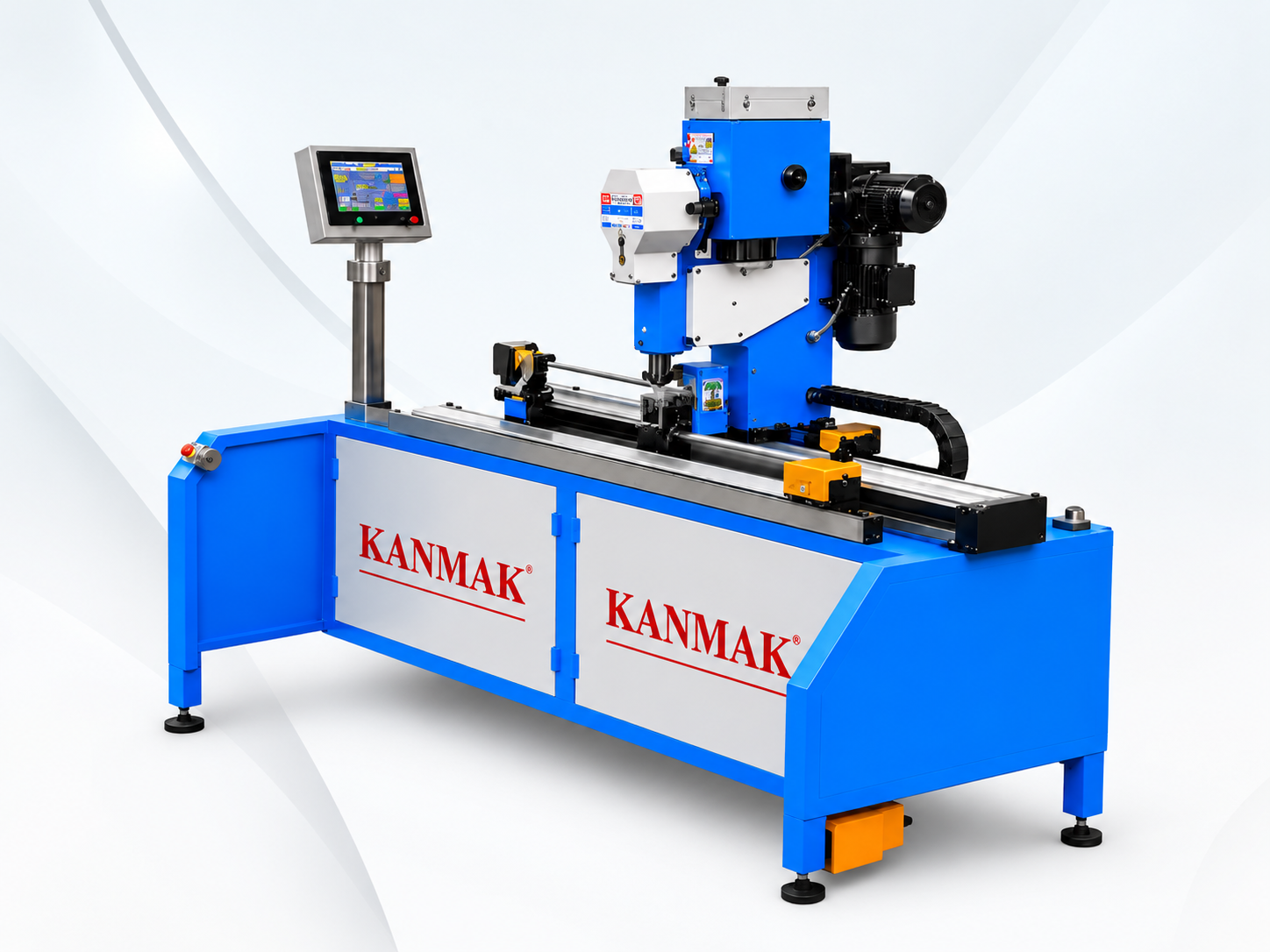
The snap on a jacket, the eyelet at a tarpaulin edge and the rivet on a bag handle are small components with a direct effect on durability and appearance. This guide introduces common accessories, their applications and the machines used to fit them.
Snap fasteners
A snap fastener has male and female sides that open and close. Applications include jackets, shirts, baby clothing, bags and tarpaulins.
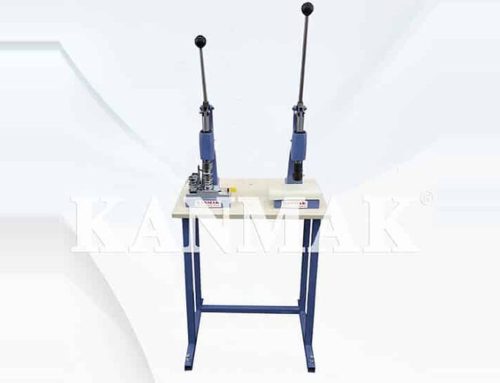
- Spring snaps: Consist of a cap, socket, stud and post. They are common in outerwear. The KM 5800 model 61 and KM 5700 model 54 automatic machine sets support production applications.
- Baby snaps: Stud and spring types serve baby and children’s clothing. The KM 6100 works with sizes from 7.5 to 21 mm.
Eyelets
An eyelet reinforces a hole in fabric or leather with a metal ring. Shoes, tarpaulins, curtains, tents, insect screens, bags and belts use eyelets for laces, cords or hooks. A washer behind the eyelet provides additional support.
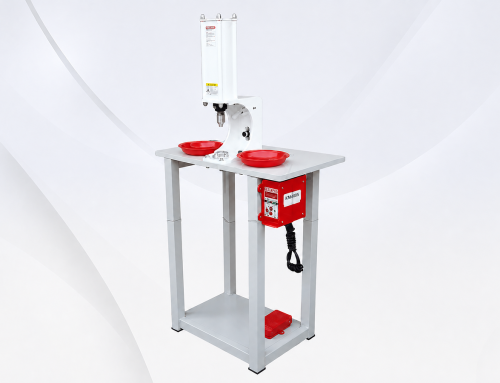
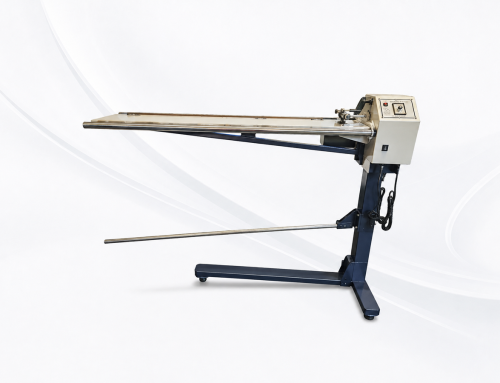
Adjustable force helps match the setting process to the material: thin fabric needs less force than tarpaulin. The KM 400K offers a 0–99 force adjustment range. Kanmak also offers a dedicated eyelet setting machine for insect screens.
Rivets
Rivets permanently join layers and can also provide decoration. They appear on jeans pockets, bag handles, belts and leather accessories.
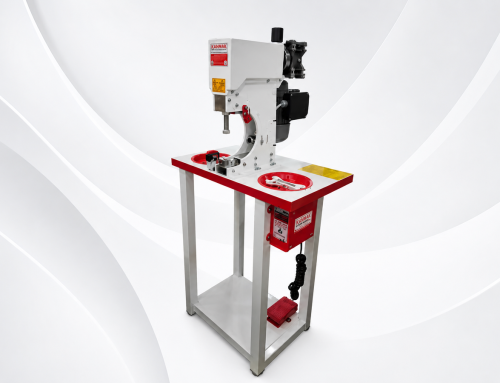
- The KM 400P and KM 400 R are electric models with adjustable force for their respective rivet applications.
- The KM 600 Bag Riveting Machine offers an extended working area for deep products such as schoolbags and backpacks.
- The KM 750 and the newer quiet KM 760 rivet spinning machines form the end of the rivet to secure the joint.
Buttons and hooks
Jeans buttons use a tack rather than stitching. Trouser and boot hooks can also be attached with a press. The KM 5000 Automatic 14–17 Button Setting Machine automatically feeds components for production runs.
One machine, multiple jobs: the role of dies
Many electric and motor-driven presses can perform different tasks by changing the dies. With suitable tooling, the KM 600 can set rivets, snaps, baby snaps, eyelets, buttons and several hook types, as well as punch holes. Start with the die for your current accessory and add tooling as your needs change.
Why correct dies matter
- Size compatibility: The die must match the accessory precisely. A mismatch can bend it or prevent proper seating.
- Alignment: Upper and lower dies must share the same axis to avoid damaging the material.
- Force: Excessive force crushes the accessory; insufficient force leaves a loose joint. Establish the correct setting on a sample.
Send Kanmak a sample or the dimensions of your accessory so we can help select a machine and dies. Call +90 212 519 53 89.